Why Does Loungewear Bag Out at the Knees and Seat Within Weeks?
Quick Answer: Bagging is a fabric recovery failure, not wear and tear. Cotton and viscose fibers stretch under sustained pressure and do not spring back, so hours of sitting deform the knee and seat permanently. Look for at least 5 percent elastane, avoid pure viscose or rayon in anything you sit in, wash cold and dry flat or on low, and give bagged pieces 24 hours flat between wears - most of the shape returns on its own if the fiber has any recovery left.
The set looked perfect for three weeks. Now the knees hold the shape of your knees even when your knees have left the room.
That is not the fabric wearing out. It is the fabric doing exactly what its fiber content said it would.

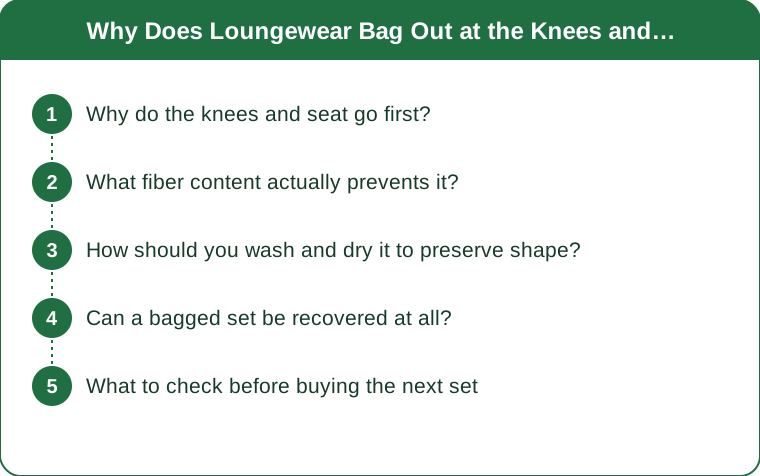
Why do the knees and seat go first?
Because those are the only two places under sustained load. Bagging is caused by continuous pressure over hours, not by movement. Your knees are bent and pressed for the entire time you sit, and the seat carries your weight against a chair, so those two areas receive a stress no other part of the garment gets.
Fibers respond to sustained stretch in one of two ways. Elastic fibers deform and return. Inelastic fibers deform, hold the new shape, and only partially relax. Cotton, viscose, rayon, modal, and bamboo are all in the second group, and they are also the fibers that make loungewear feel good, which is the entire tension in the category.
The technical term is poor recovery, and it is measured separately from stretch. A fabric can stretch beautifully and recover badly, which is precisely the profile of the soft viscose blends that dominate affordable loungewear.
Heat and moisture make it dramatically worse, which is why bagging accelerates in a warm room and why the same pants worn for eight hours on a hot day deform more than eight hours in a cool one. Warm damp fibers deform more readily and set into the new shape more permanently.
Weight of the fabric plays a smaller role than people expect. A heavy 100 percent cotton fleece bags at the knees just as readily as a thin one; it simply takes slightly longer to become obvious because the bulk hides the early stage.
What fiber content actually prevents it?
Elastane is the single most useful thing on the label. Five percent or more, paired with anything else, changes the recovery profile of the whole fabric. Two percent is mostly marketing. Anything at 5 to 8 percent will hold shape through a full day of sitting and return overnight.
Among the soft fibers, modal recovers better than viscose or rayon, and both are better than bamboo viscose, which is usually the worst offender in this category despite marketing that suggests otherwise. If a set is pure bamboo viscose and you plan to sit in it, expect bagging within a month.
Knit structure matters almost as much as fiber. A tighter rib or interlock knit resists deformation considerably better than a loose jersey at the same fiber content, which is why two 95/5 cotton-elastane pants can behave completely differently.
French terry and brushed-back fleece tend to hold up better than single jersey, because the loop or pile structure distributes the load rather than concentrating it in individual yarns.
And weight, honestly, is a poor proxy for quality here. A midweight 95/5 modal-elastane rib outperforms a heavy 100 percent cotton fleece for shape retention, even though the fleece feels more substantial in the hand and costs more.
Is elastane worth it if it makes the fabric feel less natural?
At 5 percent the hand feel change is minimal and the shape difference is large. Above about 10 percent you start to notice a synthetic quality, which is why most well-made loungewear sits in the 5 to 8 percent band.
Does price predict recovery?
Only loosely. Plenty of expensive loungewear is pure viscose because it feels luxurious in a shop, and plenty of mid-price sets use a well-chosen blend. The label predicts better than the price does.

How should you wash and dry it to preserve shape?
Cold water, always. Heat relaxes fibers and relaxed fibers deform more easily on the next wear. Warm washing is the single most common cause of a set that bags noticeably worse after a few weeks than it did at first.
Skip the fabric softener. It coats fibers and reduces their ability to spring back, and on any blend containing elastane it accumulates and degrades the elastic component over time. Half a cup of white vinegar in the rinse gives you the softness without the coating.
Wash inside out on a gentle cycle, which reduces abrasion on the surface and, on brushed fabrics, keeps the pile from matting - matting makes bagging look worse than it is.
Air dry flat wherever possible. Hanging wet pants lets gravity stretch the leg and seat while the fibers are at their most deformable, which is a slow, self-inflicted version of the same problem. Flat on a rack or a towel is best.
If you must use a dryer, use low heat and pull them out slightly damp. High heat is what permanently degrades elastane; the fiber breaks down and the recovery never returns.
Does washing more often make bagging worse?
The opposite, usually. A gentle cold wash relaxes the fibers back toward their original dimension, which is why bagged pants often look better after washing. It is the heat and the softener that cause harm, not the water.
Can you shrink bagged knees back with a hot wash?
On pure cotton it sometimes tightens things temporarily, and on any blend with elastane it damages the recovery permanently. It is not a fix worth trying.
Can a bagged set be recovered at all?
Partially, and more than most people assume. If the fabric contains any elastane, 24 to 48 hours resting flat will return a surprising amount of shape. The deformation is a mix of temporary and permanent, and the temporary portion recovers on its own if you stop wearing them long enough for it to.
Rotating two sets rather than living in one changes the outcome entirely. Alternate days give each set the recovery window it needs, and two sets rotated will both outlast one set worn continuously by a wide margin - not double, considerably more.
A cold wash and flat dry recovers more than resting alone, because water lets the fibers relax back toward their original dimension rather than merely releasing surface tension.
For pure cotton or viscose with no elastane, permanent deformation is genuinely permanent. Steam can improve the look temporarily, but the yarns have taken a new length and there is no home process that reverses that.
Knowing which category a piece is in tells you whether to bother. Check the label: if it says 5 percent elastane or more, rest and wash it and it will likely come back. If it says 100 percent viscose, the bagging you can see now is roughly the best it will look from here.
How long should a good set hold its shape?
A well-chosen blend, rotated and washed cold, should hold shape for a year or more of regular wear. Bagging within the first month points to fiber content, not to how you are treating it.
Is bagging the same problem as pilling?
No - pilling is surface abrasion and bagging is structural deformation. A fabric can pill badly and hold shape perfectly, or the reverse, which is why they need different fixes.
What to check before buying the next set
Read the composition before the price, and treat 5 percent elastane as the threshold for anything you intend to sit in for hours. This one habit prevents most disappointment in this category.
Stretch a small area between your hands and let go. If it returns immediately and completely, recovery is good. If it stays slightly open for a second, that is the exact behaviour you will see at the knees in three weeks, magnified by eight hours of sitting.
Prefer rib or interlock over loose jersey in the bottom half specifically. The top half carries much less sustained load and can be whatever feels nicest.
Consider buying two of a set you like rather than two different ones, because rotation is the highest-leverage thing you control and identical sets make rotation effortless.
As the weather cools over the next few weeks and loungewear moves from a few evening hours to most of a weekend day, the load on these fabrics roughly triples - which is why sets that survived the summer start bagging in October and people blame the wrong thing.
What is the single best predictor of a set that keeps its shape?
Elastane at 5 percent or above, in a rib or interlock knit, washed cold and dried flat. That combination handles nearly everything else.
TL;DR:
- Bagging is a fabric recovery failure caused by hours of sustained pressure, not by wear or movement.
- Cotton, viscose, rayon, and bamboo stretch and hold the new shape; 5 percent or more elastane is what changes the outcome.
- Wash cold, skip fabric softener, and dry flat - heat and hanging are what make it permanent.
- Rotating two sets rather than living in one dramatically extends the life of both.
- A set with elastane recovers much of its shape after 24 to 48 hours resting flat; one without will not.
Stretch the fabric between your hands in the shop and watch how it returns. That two-second test predicts the next six months better than the price tag does.
See It in Motion
Seen here: High Waist Drawstring Wide Leg Yoga Pants with Pockets — shop it on bubblelime.com
Keep Reading
This article is for general informational and styling purposes only. Fit, sizing, and product availability may vary.