Loungewear Once the Heating Comes On: Every Question, Answered
Quick Answer: Heated indoor air is dry air, and dry air changes everything about how fabric behaves — static increases, skin dries out, and fabrics that felt soft in humid weather feel scratchy. The move is toward natural or blended fibers with some moisture regulation and away from pure synthetics and heavy fleece, plus a lower ambient humidity fix if you can manage one.
You did not change your loungewear. The heating came on, and suddenly the same set clings, crackles, and feels rougher than it did a month ago.
That is the air, not the fabric — but it changes which fabric you should be reaching for.
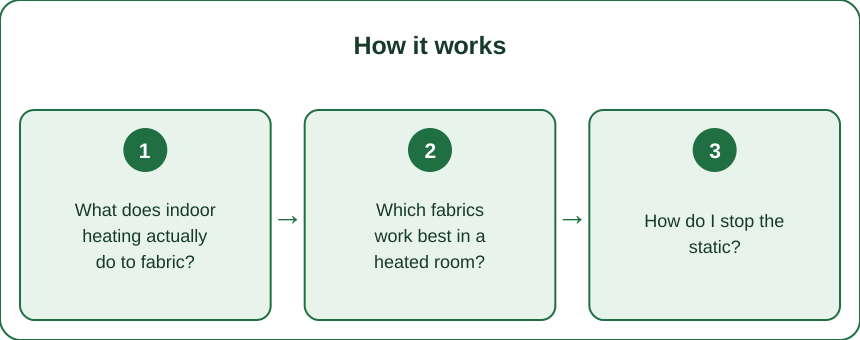
What does indoor heating actually do to fabric?
Why does everything suddenly generate static?
Static builds when charge cannot dissipate, and moisture in the air is what normally lets it dissipate. Heated indoor air commonly drops to 20-30 percent relative humidity, well below the comfortable 40-50 percent range. Below roughly 40 percent, synthetic fabrics start holding charge, and polyester and acrylic are the worst offenders.
Why does the same fabric feel scratchier?
Two reasons. Dry fibers are stiffer, so the individual fiber ends sit up rather than lying flat against the skin. And your own skin is drier and more sensitive in low humidity, which lowers the threshold at which you notice texture. Both effects hit at once, which is why the change feels abrupt.
Why do I feel cold in a warm room?
Dry air increases evaporative cooling from your skin, so you lose heat faster at the same air temperature. This is why a heated room at 70 degrees can feel less comfortable than a humid room at 68 — and it is why people turn the heat up further, which dries the air more.
Does this affect all fabrics equally?
No, and this is the useful part. Natural fibers hold some moisture themselves, which buffers all three effects. Wool and cotton stay more comfortable in dry air than polyester or acrylic do, and blends land in between roughly in proportion to their natural content.
Which fabrics work best in a heated room?
What should I be looking for?
Fibers with some moisture regulation. In rough order for heated indoor use: merino wool, cotton and cotton blends, modal and lyocell, bamboo viscose, then synthetics last. Merino is the standout because it regulates temperature in both directions and does not generate static.
Is fleece a bad choice?
Polyester fleece is the highest-static fabric in most people’s wardrobes and it does not breathe well, so you overheat and then feel clammy. It is genuinely cozy for a cold room and genuinely uncomfortable in a heated one. If you love fleece, look for a cotton-backed version or a fleece-lined cotton knit rather than pure polyester.
What about modal and bamboo?
Both are excellent for heated rooms — they are smooth, drape well, hold moisture better than polyester, and generate far less static. Modal in particular resists the pilling that makes loungewear feel cheap after a few months.
Is wool too warm for indoor lounging?
Lightweight merino is not. The mental association between wool and heavy sweaters is misleading — a fine merino base layer or lounge top regulates rather than insulates, which is exactly what an overheated room needs. It is also the only fiber on this list that resists odor over multiple wears.
Does thread count or weight matter?
Weight matters more than you would think. A mid-weight fabric in a dry heated room outperforms a heavy one, because the room is already warm and the problem is air quality rather than temperature.
How do I stop the static?
What actually works?
In order of effectiveness: raise the room humidity, switch to natural-fiber fabrics, stop using the dryer, and use a fabric-safe anti-static approach as a last resort. A humidifier that gets the room to 40-50 percent relative humidity solves the problem at the source and improves your skin and sleep at the same time.
Does fabric softener help?
It reduces static, and it is a poor trade on anything that needs to breathe or wick. Softener coats fibers in a waxy layer that reduces absorbency and traps odor. For pure lounge items that never see sweat it is defensible; for anything you might work out or sleep heavily in, it is not.
What about dryer balls or aluminum foil?
Wool dryer balls genuinely reduce static and drying time without coating the fabric, and they are the better option than sheets. A ball of aluminum foil in the dryer works too and costs nothing. Both are partial fixes compared with just air drying.
Why does the dryer make it so much worse?
Tumbling generates charge through friction, and the heat removes the last of the fabric’s moisture — so garments come out maximally dry and maximally charged. Air drying in a heated room still leaves them dry, but without the friction charge.
Any quick fix in the moment?
Lightly misting the garment with water, or running slightly damp hands over it, discharges it immediately. A leave-in hair conditioner diluted in a spray bottle works too, though it is a temporary measure rather than a habit.
How should a loungewear set change for the season?
Do I need a completely different set?
No. Most people need one addition and one subtraction: add a mid-weight natural-fiber layer, and retire the heavy fleece to genuinely cold spaces. The summer cotton set often still works if the room is well heated.
What is the ideal setup for a heated home?
A fine merino or modal long sleeve as a base, mid-weight cotton or modal bottoms, and a chunkier overlayer for when you are actually cold. The overlayer being separate is the point — a single heavy piece leaves you no adjustment, and heated rooms swing more than you expect between when the heating cycles on and off.
Should I size differently?
Slightly looser is better in dry heat, because air movement against the skin helps and close-fitting synthetics cling with static. This is the opposite of what works in a cold room.
What about socks?
Wool socks over synthetic, for the same reasons as everything else — less static, better moisture regulation, and feet are where dry-air discomfort concentrates. This is a small change with disproportionate comfort return.
How long should a good set last?
Two to three years of regular wear for mid-range quality, and longer for merino and modal, which resist pilling far better than cotton-poly blends. What kills loungewear early is almost always the dryer, not the wearing.
What about sleep and skin in a heated room?
Does loungewear fabric affect sleep quality?
Yes, mainly through temperature regulation. Your core temperature needs to drop slightly to initiate sleep, and a fabric that traps heat and moisture interferes with that. Breathable natural fibers help; heavy fleece pajamas in a heated bedroom work against you.
Why is my skin worse since the heating came on?
Low humidity pulls moisture out of the skin barrier, and the barrier is already under more stress from hot showers and indoor heat. Fabric contributes at the margin — rough or high-static fabrics irritate a compromised barrier more than they would a healthy one.
Does that mean natural fibers are better for sensitive skin?
Generally yes, with one caveat: some people are genuinely sensitive to wool, particularly coarser wools. Fine merino has a much smaller fiber diameter and is tolerated by most people who cannot wear standard wool, but if you have a genuine wool sensitivity, modal or lyocell is the better direction.
Is a humidifier really worth it?
It is the single highest-value purchase in this entire article. It fixes static, fabric feel, skin dryness, and the cold-in-a-warm-room problem simultaneously, which means it makes every set of loungewear you already own perform better.
General comfort information. Persistent skin irritation, eczema flares, or any reaction that does not settle when you change fabrics is worth discussing with a healthcare professional.
TL;DR:
- Heating dries the air to 20-30 percent humidity, which causes static, stiffer fibers, and drier skin all at once
- Move toward merino, cotton, modal, and lyocell; move away from polyester fleece and acrylic
- Skip the dryer and the fabric softener — wool dryer balls and air drying do the job without coating the fibers
- A humidifier fixes the root cause and makes every set you already own feel better
The loungewear did not get worse. The air did, and it is easier to change the air than to keep buying sets that will feel the same way in November.
See It in Motion
Seen here: High Waist Wide Leg Yoga Pants with Pockets — shop it on bubblelime.com
Keep Reading
This article is for general informational and styling purposes only. Fit, sizing, and product availability may vary.