Loungewear Sizing Questions Nobody Answers Properly
Quick Answer: Sizing up in loungewear works for tops and generally fails for bottoms. Extra room in a top reads as an intentional relaxed cut, while extra room in trousers drops the crotch and the waistband and produces a slouched line rather than a comfortable one. Buy tops one size up if you want the oversized look, keep bottoms at your true size in a soft fabric, and pay attention to shoulder seam position, which is what separates a deliberately oversized garment from one that is simply too big.
You sized up the whole set because comfort was the point, and now the top is perfect and the bottoms make you look like you are recovering from something.
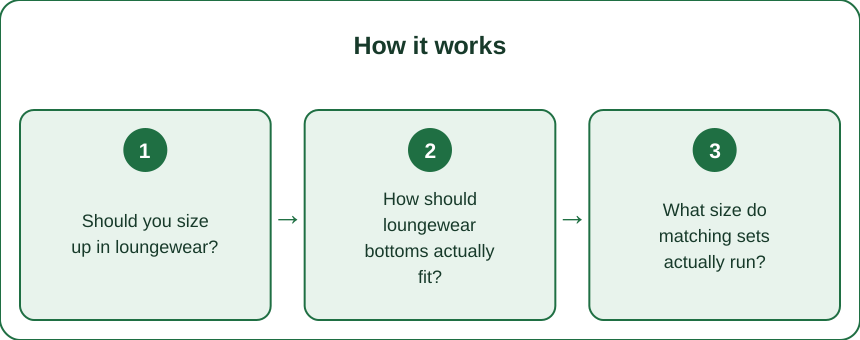
Should you size up in loungewear?
Only in some pieces, and the reason is structural rather than aesthetic.
Tops have no fixed anchor point. A t-shirt or sweatshirt hangs from the shoulders, and the only real constraint is where the shoulder seam sits. Extra width and length read as a relaxed cut.
Bottoms are anchored at two points. The waist and the crotch. Sizing up moves both - the waistband sits lower and the crotch drops - and neither adds comfort. A dropped crotch restricts stride and bunches when you sit, which is the opposite of what you were buying.
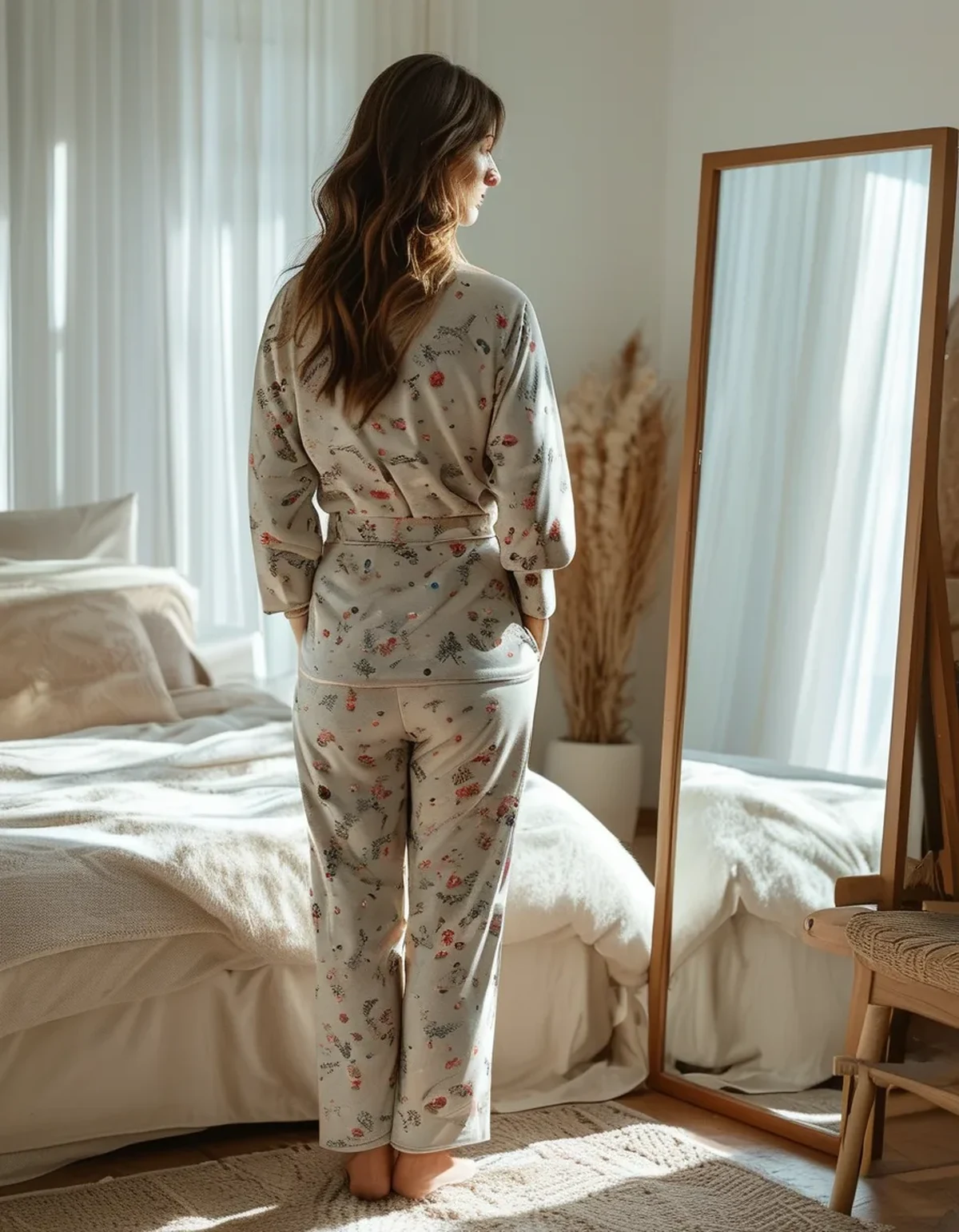
The shoulder seam is the give-away. On a deliberately oversized top, the seam is designed to fall onto the upper arm. On a top that is simply too big, the seam falls onto the arm as an accident, and the difference is visible in how the sleeve hangs from there.
Sleeve length exposes it too. An oversized garment is drafted with sleeve length matched to the dropped shoulder. Sizing up in a standard cut gives you a dropped shoulder with a sleeve that is now far too long.
Fabric weight changes the calculation. Heavy fleece holds its shape when oversized. Lightweight jersey or modal drapes and clings, so an oversized cut in a thin fabric reads as shapeless rather than relaxed.
Practical rule: size up in tops and outer layers if you want the look, stay true to size in bottoms, and prefer a garment designed oversized to a larger version of a fitted one.
How should loungewear bottoms actually fit?
Comfort in bottoms comes from cut and fabric, not from extra size.
The waistband should sit without gripping or sliding. A wide, soft, flat elastic in your true size is far more comfortable than a narrow band a size up that keeps rolling down.
The crotch should sit close to your body. A dropped crotch feels roomy standing still and awkward everywhere else, particularly when you sit cross-legged - which is most of what loungewear is for.
Hips should have ease without excess. Roughly 5 to 10 centimetres of ease at the hip is comfortable. More than that and the fabric folds and bunches under you when seated.
Length matters more than width for comfort. A trouser that is too short pulls when you sit and rides up at the ankle. Most people would benefit from more length and less width than they buy.
Look for a gusset in the crotch. A small diamond or triangular panel dramatically improves both comfort and durability, and it is the mark of thoughtful construction. It is also the seam that fails first when it is absent.
Drawstrings should be functional, not decorative. A fixed elastic with a fake drawstring gives you no adjustment. A genuine drawstring lets you keep your true size and fine-tune it, which is the whole solution to the sizing question.
What size do matching sets actually run?
Sets introduce their own problem, and it is worth naming.
Sets are sized as a unit, and bodies are not. If you are one size on top and another on the bottom, a set will fit one half correctly. This is the single most common source of disappointment with matching loungewear.
Buy separates if your sizes differ. Two pieces in the same fabric and colour from the same brand achieve the same look with the right fit. The only cost is that you have to look for them.
If the set is sold as a unit, size for the bottoms. A slightly snug top is more wearable than trousers that do not fit, and tops are more forgiving in either direction.
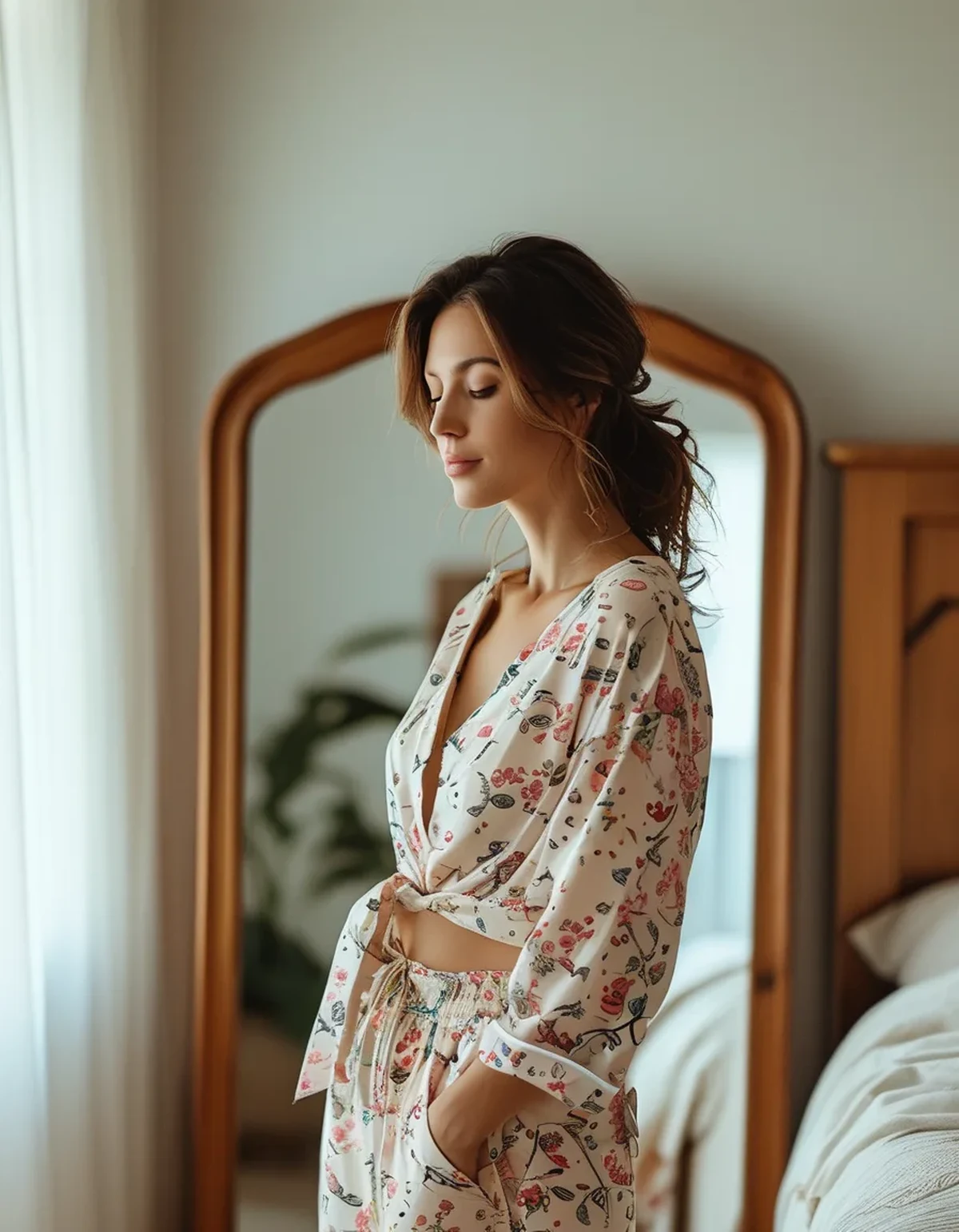
Check whether the pieces are drafted to be worn together. Some sets are designed with the top cropped to meet a high waistband. Sizing changes that relationship and the set stops looking coordinated.
Watch for shrinkage differences between pieces. Cotton sets frequently shrink more in the trousers than the top, because the trousers carry more fabric and take longer to dry. Wash both the same way from the first wash.
And treat the second wash as the real fit test. Loungewear fabrics relax and shrink in their first two cycles, and the fit you get after that is the fit you have.
Which fabrics change size and which stay put?
Fit stability varies enormously by material, and this affects what size to buy.
Cotton jersey shrinks and stays shrunk. Expect 3 to 5 percent in the first wash unless pre-shrunk. Buying with this in mind is more reliable than hoping the label is honest.
Modal and viscose relax rather than shrink. They stretch out through wear and partially recover in the wash, so they feel looser by evening and tighter after laundry day. Buy these true to size, since the relaxing is built in.
French terry and fleece are stable. Heavier knits hold their dimensions well, which is why they are the most reliable choice for an oversized look that stays looking deliberate.
Linen blends grow with wear. They soften and relax substantially, and a linen set that fits perfectly in the shop will be noticeably looser within a month.
Anything with elastane holds shape longest and fails most abruptly. Elastane keeps the fit consistent for a year or two and then degrades, at which point the garment goes from fine to baggy quite suddenly.
Ribbed knits are the most forgiving across sizes. The structure accommodates a range of bodies while still looking fitted, which is why so much loungewear is ribbed.
And weight predicts longevity better than fibre content. A heavier fabric of any fibre holds its shape longer than a light one, which is why the cheap thin set loses its fit in six weeks regardless of what it is made of.
FAQ: Loungewear Sizing Questions, Answered
Should I size up in loungewear?
In tops, yes if you want a relaxed look. In bottoms, no - sizing up drops the crotch and the waistband, which restricts movement and bunches when you sit. Comfort in bottoms comes from cut and fabric, not extra size.
How do I know if a top is oversized or just too big?
Look at the shoulder seam and sleeve length together. A garment designed oversized has the sleeve length matched to the dropped shoulder. A too-large standard cut gives you a dropped shoulder and a sleeve that is now far too long.
What if I am different sizes on top and bottom?
Buy separates in the same fabric and colour rather than a set. If the set is only sold as a unit, size for the bottoms - a slightly snug top is far more wearable than trousers that do not fit.
Does loungewear shrink?
Cotton jersey typically shrinks 3 to 5 percent in the first wash. Modal and viscose relax with wear instead. French terry and fleece are the most dimensionally stable, which makes them the safest choice for a specific fit.
How much room should loungewear trousers have at the hip?
Roughly 5 to 10 centimetres of ease. Beyond that the fabric folds and bunches when you sit, which is uncomfortable in exactly the situation the garment exists for.
When should I judge the fit of new loungewear?
After the second wash. Most loungewear fabrics shrink or relax across the first two cycles, and what you have then is what you will have permanently.
TL;DR:
- Size up in tops, stay true to size in bottoms - extra room in trousers drops the crotch and reduces comfort.
- The shoulder seam and sleeve length together tell you whether a top is oversized by design or just too big.
- Buy separates rather than sets if your top and bottom sizes differ; if you must buy a set, size for the bottoms.
- Cotton shrinks, modal relaxes, fleece stays put - fabric determines how the fit will change.
- Judge the fit after the second wash, not in the shop.
Comfort in loungewear is a cut question, not a size question. The people who size up everything end up with one piece they love and one they never wear.
See It in Motion
Seen here: Yoga Jogger Sweatpants with Pockets — shop it on bubblelime.com
Keep Reading
This article is for general informational and styling purposes only. Fit, sizing, and product availability may vary.