The Loungewear Fabric Guide: What Makes Something Actually Cozy (and Last)
Quick Answer: The best fabrics for comfortable loungewear are cotton and cotton blends (breathable, easy care), modal and Tencel (buttery soft with beautiful drape), French terry and fleece (warm and cozy), cashmere and wool (luxurious warmth), and soft jersey knits. Avoid cheap polyester — it pills fast and doesn’t breathe. Check the composition label, feel the fabric before buying, and wash cold on gentle to prevent pilling.
There’s loungewear you live in, and loungewear you regret buying within a month.
Same price range. Same shape on the hanger. Completely different outcome after ten washes — one gets softer, the other goes pilled and scratchy and ends up as the thing you wear to take out the trash.
The difference is almost entirely the fabric. Here’s what to look for.
Why does fabric matter more than anything else in loungewear?
Because coziness is the whole point, and coziness is a fabric property.
With most clothing, cut and fit do the heavy lifting. Loungewear has no such job — it’s loose by design. What’s left is how the fabric feels against your skin for hours at a time, and how it holds up.
Cheap fabric pills and dies. Low-grade polyester and loosely spun cotton develop bobbles within a handful of washes, and once pilling starts it doesn’t reverse.
Quality fabric gets better. Good cotton, modal and French terry soften with each wash and hold their surface for years.
Both feel and durability come from the same choice, which is why loungewear is a fabric-first purchase rather than a style-first one.
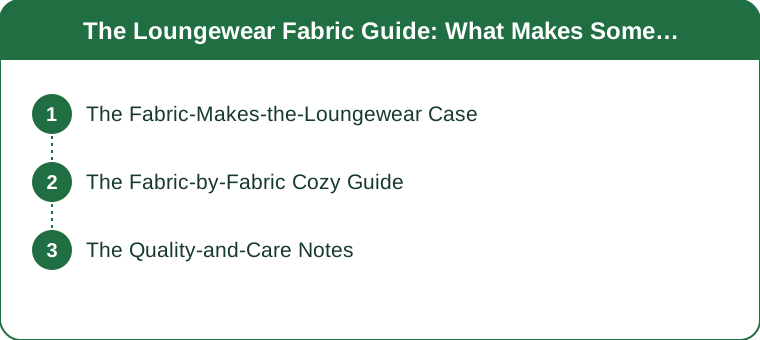
What fabrics are best for loungewear?
Cotton and cotton blends. Breathable, soft, easy care, and forgiving of frequent washing. The everyday default, and the best choice for warm sleepers. Look for a decent weight — very thin cotton loses shape fast.
Modal and Tencel. Buttery soft with a fluid drape that cotton can’t match. These are the fabrics behind most “why is this so soft” reactions. They’re also more resistant to pilling than standard cotton, which is why they’re worth the small premium.
French terry and fleece. The warm-cozy tier, and the sweatshirt-soft feel most people picture when they think of loungewear. French terry is the more breathable of the two and works across more of the year; fleece is warmer and better for genuinely cold rooms.
Cashmere and wool. The luxury option — warm, light and remarkably soft. Expensive, needs gentle care, and worth it for one or two pieces rather than a whole wardrobe.
Jersey knits. T-shirt soft, easy, and the most casual of the group. Good for sleep sets and warm-weather lounging.
Ribbed and waffle textures. Not a fiber, but a construction worth seeking out — both add visual interest and a bit of stretch, and waffle in particular traps air for warmth without weight.
What to avoid: cheap polyester. It doesn’t breathe, it holds odor, and it pills faster than anything else on this list. Some polyester in a blend is fine — 100% cheap poly is where regret lives.
Match the fabric to the season and to the feeling you want: cotton and modal for warmth-neutral softness, terry and fleece when you want to be genuinely warm.

How do you spot quality before you buy?
Read the composition label. This takes four seconds and tells you most of what you need. A high percentage of cotton, modal, Tencel, wool or cashmere is a good sign; a high percentage of unnamed polyester usually isn’t.
Feel it. Rub the fabric between your fingers. Quality knits feel dense and smooth; cheap ones feel thin and slightly plasticky. This test is embarrassingly reliable.
Check the weight and construction. Hold it up to light — if you can see straight through a supposedly cozy sweatshirt, it won’t hold shape. Look at the seams and the cuff ribbing, which is where cheap pieces fail first.
Invest where you live. Spend on the two or three pieces you wear constantly and economize on the rest. That’s a better allocation than buying five mediocre sets.
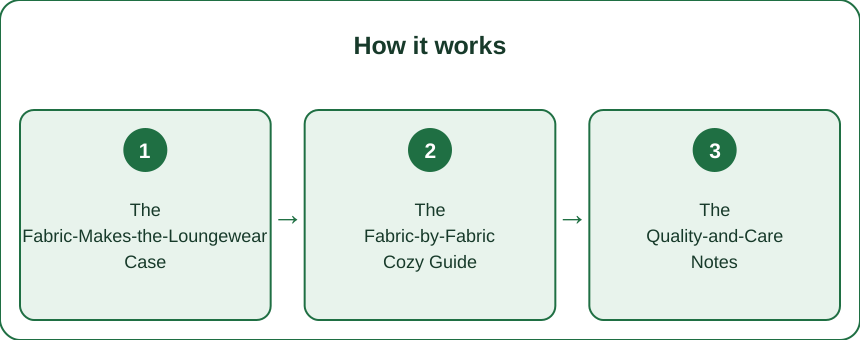
Myth vs Fact: loungewear fabrics
Myth: Softer in the store means softer after ten washes. Fact: Cheap fabrics are often treated with softeners that wash out within a few cycles, leaving a thinner, scratchier fabric underneath. Density and fiber content predict long-term softness far better than the in-store hand feel does.
Myth: Fleece is the warmest option. Fact: Fleece is warm for its weight, but cashmere and wool are warmer per gram and considerably lighter. Fleece wins on price and easy care, not on thermal performance.
Myth: 100% cotton is always the best choice. Fact: Cotton is excellent and breathable, but it wrinkles, holds moisture and stretches out. Blending it with modal or a small amount of elastane usually produces a piece that keeps its shape and feels better over time.
Myth: Pilling means you washed it wrong. Fact: Washing habits affect the rate, but pilling is largely determined by fiber length and how tightly the yarn is spun. Cheaply spun fabric will pill even with perfect care.
How do you keep loungewear soft?
Wash cold, on gentle. Heat and agitation are what cause pilling. Cold water on a gentle cycle extends the life of soft knits substantially.
Dry low or air-dry. High heat is what turns a buttery modal set stiff and what shrinks cotton unpredictably.
Wash similar fabrics together. Rough items — denim, towels, zippers — abrade soft knits in the machine, and that abrasion is what starts pills.
Turn pieces inside out. Same principle as denim: the friction happens on the surface facing outward.
If pilling has already started, a fabric shaver restores the surface reasonably well. Prevention is easier, but it isn’t a lost cause.
Frequently Asked Questions
What fabric is best for comfortable loungewear?
Cotton and modal are the best all-round choices — breathable, soft against skin, and easy to care for. For warmth, French terry and fleece; for luxury, cashmere. Avoid cheap 100% polyester, which doesn’t breathe and pills quickly.
Is modal better than cotton for loungewear?
Modal is softer, drapes better and resists pilling more than standard cotton, so it feels more luxurious over time. Cotton is more breathable, cheaper and more durable under heavy washing. Many of the best pieces blend the two.
How do you stop loungewear from pilling?
Wash cold on a gentle cycle, dry on low or air-dry, turn pieces inside out, and keep soft knits away from denim and towels in the same load. Choosing a denser, better-spun fabric in the first place prevents more pilling than any washing habit can.
TL;DR:
- Loungewear is a fabric-first purchase — cut matters far less than how it feels and lasts
- Best fabrics: cotton and cotton blends, modal and Tencel, French terry and fleece, cashmere, soft jersey
- Avoid cheap 100% polyester; it doesn’t breathe and pills within a few washes
- Read the composition label, feel the fabric, and check weight and cuff construction before buying
- Wash cold and gentle, dry low, turn inside out, and keep soft knits away from denim and towels
See It in Motion
Seen here: Yoga Jogger Sweatpants with Pockets — shop it on bubblelime.com
Keep Reading
This article is for general informational and styling purposes only. Fit, sizing, and product availability may vary.