Is Your Loungewear Actually Comfortable, or Just Soft?
Quick Answer: Soft fabric hand-feel and actual all-day comfort are different things — comfort depends on stretch recovery, seam placement, and rise, not just how the fabric feels between your fingers in the store.
You touched it in the store and it felt like a cloud. Three hours of actual wear later, the waistband is digging and the sleeves are riding up. Soft and comfortable get confused constantly — here’s how to tell which one you’re actually buying.

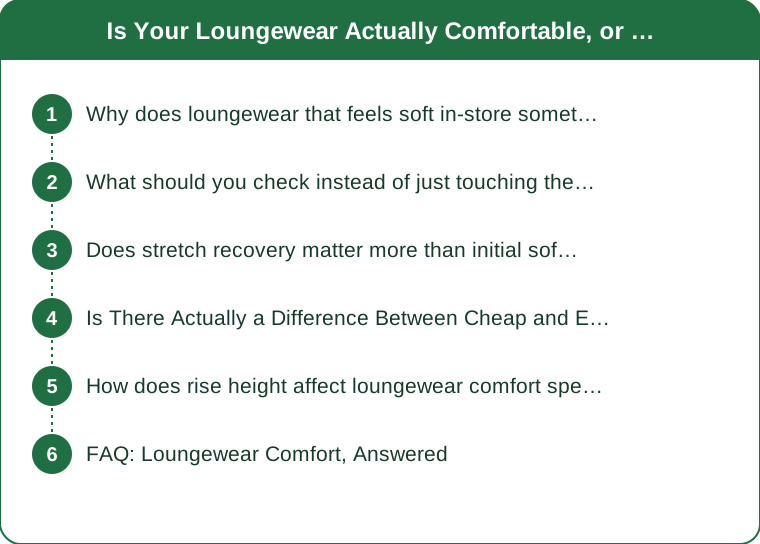
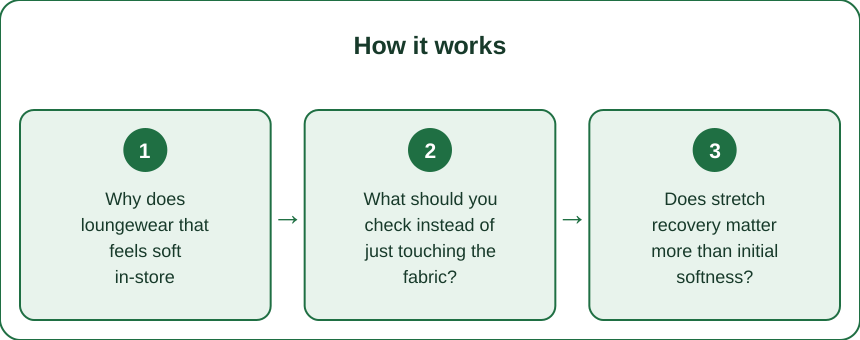
Why does loungewear that feels soft in-store sometimes feel bad after an hour?
Hand-feel is a fabric surface property; comfort is a fit and construction property. A fleece can feel plush against your palm and still have a waistband that digs after sitting, or seams placed exactly where your body bends. The store test — squeezing the fabric — tells you almost nothing about how it performs once your body is actually moving in it.
What should you check instead of just touching the fabric?
Sit down in it, right there in the store or fitting room. A genuinely comfortable set won’t dig at the waist when seated, won’t ride up at the ankle when you cross your legs, and won’t pull tight across the shoulders when you reach overhead. If any of those fail in a 30-second test, three hours on the couch will fail worse.
Does stretch recovery matter more than initial softness?
Significantly more. A fabric that stretches but doesn’t recover (springs back to shape) will feel great for the first wear and progressively baggy and unsupportive after a few washes — which reads as ‘less comfortable’ even though nothing about the softness changed. Recovery, not initial stretch, is what keeps a piece feeling good long-term.

Is There Actually a Difference Between Cheap and Expensive Loungewear?
Sometimes yes, sometimes no — and the difference isn’t always where you’d expect. Price often reflects fabric weight and finishing, not comfort engineering. A mid-priced set with a well-placed flat-lock seam can outperform an expensive set with a beautiful hand-feel but a scratchy interior tag or a seam sitting right on a pressure point. Test the construction details regardless of price point.
How does rise height affect loungewear comfort specifically?
Loungewear is worn seated and reclined far more than standing, which is the opposite of most activewear’s design assumption. A rise that’s comfortable standing can dig sharply when you’re curled up on a couch — so if lounging on furniture is the main use case, prioritize a slightly higher, softer waistband over one designed primarily to look sleek standing up.
FAQ: Loungewear Comfort, Answered
Should loungewear always be sized up for comfort?
Not necessarily — too-loose loungewear can bunch and feel worse than a correctly-sized piece with good stretch. Size for the brand’s actual fit, then check stretch and seam placement.
Do natural fibers always feel more comfortable than synthetic blends?
Not automatically — a cotton-poly blend with good recovery can outperform 100% cotton that sags and loses shape after one wash. Fiber content matters less than construction quality here.
How can you tell if a waistband will dig before buying online?
Check reviews specifically mentioning sitting or lounging comfort, and look for a wide, unelasticated-edge waistband in photos — a hard elastic edge is the most common digging culprit.
TL;DR:
- Soft hand-feel and real comfort are different — test by sitting, not just touching
- Stretch recovery matters more long-term than initial softness
- Price doesn’t guarantee comfort; construction details do
- Rise height should suit lounging (seated/reclined), not just standing
Next time, sit down in the fitting room before you buy. That thirty-second test tells you more than any fabric swatch.
See It in Motion
Seen here: High Waist Wide Leg Yoga Pants with Pockets — shop it on bubblelime.com
Keep Reading
This article is for general informational and styling purposes only. Fit, sizing, and product availability may vary.