Is It Actually Bad to Wear Loungewear All Day Every Weekend?
Quick Answer: Wearing loungewear all day isn’t inherently harmful, but research on clothing and mood does suggest that staying in the exact same soft, unstructured clothes for extended stretches can subtly affect motivation and productivity for some people — the fix isn’t abandoning loungewear, it’s noticing whether it’s a genuine choice or a default that’s quietly affecting the rest of the day.
The guilt shows up Sunday evening, right on schedule, even though the actual weekend spent in soft pants felt completely fine while it was happening.
Is there any real research behind clothing affecting mood or productivity?
Yes — a concept researchers call “enclothed cognition” describes how what a person wears can measurably influence their mindset and behavior, not just how they’re perceived by others. Studies in this area have found that more structured, “put-together” clothing can be associated with sharper focus and a more task-oriented mindset compared to very loose, sleep-associated clothing, though the effect size and consistency vary across studies.
The underlying idea isn’t that comfortable clothing is inferior — it’s that clothing carries symbolic associations, and the brain partly takes cues from those associations. A garment strongly associated with sleep and rest, worn during a period meant for focus or a productive task, appears to subtly reinforce a rest-oriented mindset even when the intention was to be productive, which is a genuinely useful thing to understand rather than a reason to feel guilty about a comfortable choice of clothing.
Does this mean loungewear is actively bad for a weekend?
Not at all — a weekend is, by definition, generally meant for rest and recovery, which is exactly the state loungewear supports well. The research concern is less about loungewear itself and more about it becoming the unexamined default for every single day, including days with tasks or goals that might benefit from a slight mental shift signaled by getting dressed differently.
A weekend built around genuine rest, chosen consciously, is arguably the ideal use case for loungewear’s psychological association — the association between soft clothing and rest is working exactly as intended, supporting the goal rather than undermining anything.
How can someone tell if it’s become an unhelpful default versus a genuine, intentional choice?
A useful gut-check: does staying in loungewear all day feel like a decision, or does it feel like nothing else even occurred to you? If getting dressed in anything else genuinely never crossed your mind and the day included things you wanted to feel more focused or motivated for, that’s a sign the habit has become more automatic than intentional — worth noticing, not necessarily worth abandoning.
Another useful check: does a task that was planned for that day keep getting pushed later and later, in a way that feels different from a normal, reasonable delay? This pattern, more than the clothing itself, is the more reliable signal that the day’s mindset has drifted further into rest-mode than was actually intended when the day started, and it’s a far more useful signal to track over time than simply noticing what’s currently being worn.

Is it worth deliberately changing clothes partway through a weekend day that has mixed goals?
For some people, yes — a midday change, from loungewear into slightly more structured clothing, ahead of a task or errand that benefits from more focus, can provide a small but real psychological reset that matches the enclothed cognition research fairly directly. This doesn’t need to mean fully “getting dressed” in the traditional sense — even switching from pajama-specific pieces into daytime-labeled loungewear, or adding one more structured item like real pants instead of soft shorts, seems to provide some of this shift without sacrificing much comfort.
This strategy works best when it’s used selectively, on days that actually have a task requiring more focus, rather than as a blanket rule applied to every single weekend regardless of what’s actually planned — the point is matching clothing to the day’s actual demands, not defaulting to structured clothing out of guilt.
What Nobody Tells You About the Weekend Loungewear Guilt Cycle
The Sunday evening guilt is rarely actually about the clothing itself — it’s more often a proxy for a vague feeling that the weekend wasn’t “productive” in some ill-defined sense, and loungewear becomes an easy, visible thing to blame. A weekend spent resting in loungewear that was genuinely needed isn’t a failure that needs fixing, even if the guilty feeling shows up anyway out of habit.
This guilt pattern is worth examining on its own terms, separate from the clothing question entirely — a lot of it traces back to broader cultural messaging equating constant productivity with worth, which loungewear just happens to become a visible, easy stand-in for. Recognizing that the guilt and the clothing are two separate things can be more useful than any wardrobe change.
Does the type of loungewear (matching sets versus old sweats) make any real difference here?
Somewhat, for some people — a put-together matching loungewear set can trigger a slightly different mental association than genuinely worn-out, mismatched “around the house only” clothes, even though both are equally soft and comfortable. This isn’t a hard rule, but some people report feeling more capable of shifting gears (into a task, a call, an errand) in a tidier loungewear set than in clothes mentally filed away as “give up” clothes.
FAQ: Wearing Loungewear All Weekend, Answered
Is it worth getting fully dressed for a weekend with genuinely nothing planned?
Not necessarily — if rest is the actual goal and nothing on the day benefits from a mental productivity shift, loungewear all day is a reasonable, intentional choice, not something that needs correcting by default.
Does wearing loungewear affect actual physical health in any way?
Not directly, beyond general fabric hygiene considerations like washing frequency — the mood and productivity research is about psychological association, not a physical health effect from the clothing itself. It’s also worth knowing that this enclothed cognition effect varies quite a bit person to person: some people report a strong, noticeable shift in focus tied to clothing changes, while others notice very little difference at all, so the research describes a general pattern rather than a universal, one-size-fits-all effect.
What’s a low-effort way to get some benefit of “getting dressed” without fully abandoning comfort?
Swapping into a slightly more put-together loungewear set, or simply changing out of pajama-specific pieces into daytime-labeled loungewear, can provide some of the enclothed cognition benefit without sacrificing comfort, and it takes a fraction of the effort a full outfit change would require.
TL;DR:
- Enclothed cognition research does show clothing can subtly influence mood and focus
- Loungewear isn’t inherently bad — it well suits a weekend genuinely meant for rest
- The real question is whether it’s become an automatic default or a genuine, considered choice
- Sunday guilt is usually about vague productivity anxiety, not actually about the clothing itself
A weekend spent resting in loungewear on purpose doesn’t need defending — the goal is just noticing whether it’s still a real, conscious choice or has quietly become the only option that ever even crosses your mind anymore.
See It in Motion
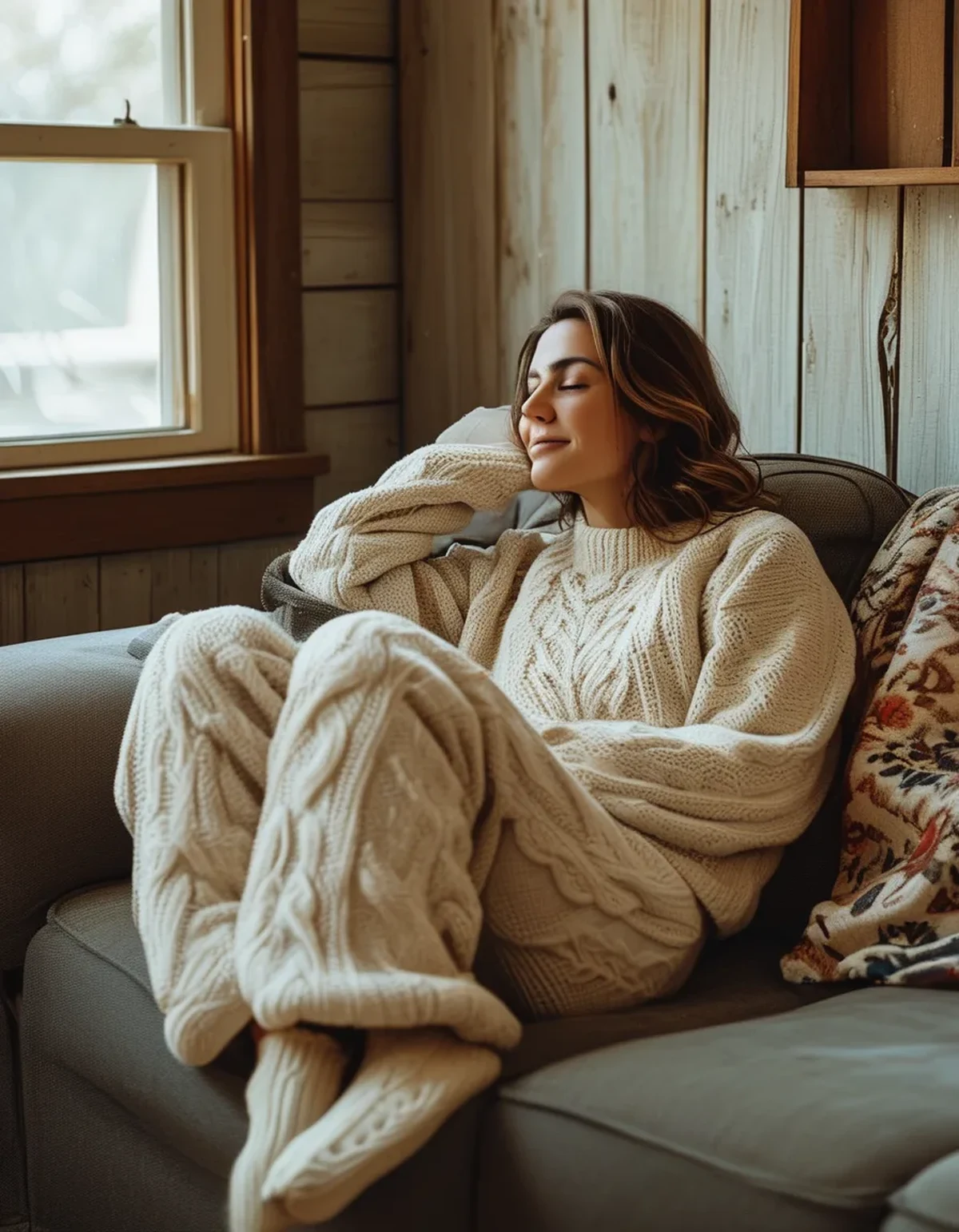
Seen here: High Waist Jogger Sweatpants with Pockets — shop it on bubblelime.com
Keep Reading
This article is for general informational and styling purposes only. Fit, sizing, and product availability may vary.