How Do You Tell Good Loungewear from Expensive Loungewear?
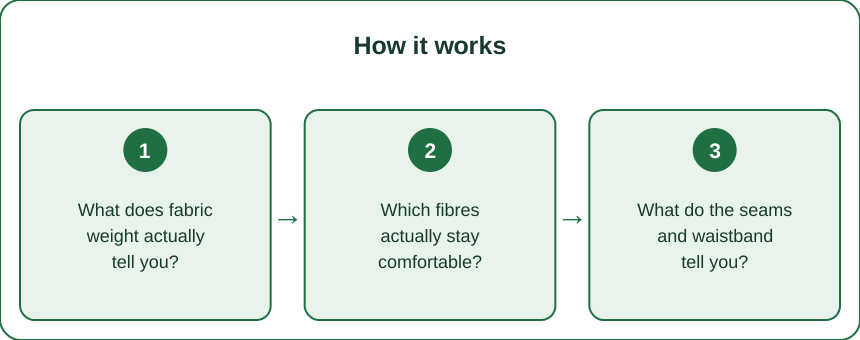
Quick Answer: Check four things and ignore the price: fabric weight in GSM (280 to 340 for cotton knits is the comfortable range), fibre content (look for combed or ring-spun cotton, modal, or Tencel rather than generic cotton or high polyester), seam type (flatlock or covered seams, not exposed overlock), and the waistband construction (wide, knit-covered elastic rather than a bare elastic band in a tube). Expensive loungewear frequently fails all four.
Each of these predicts a specific failure you would otherwise discover after three washes.

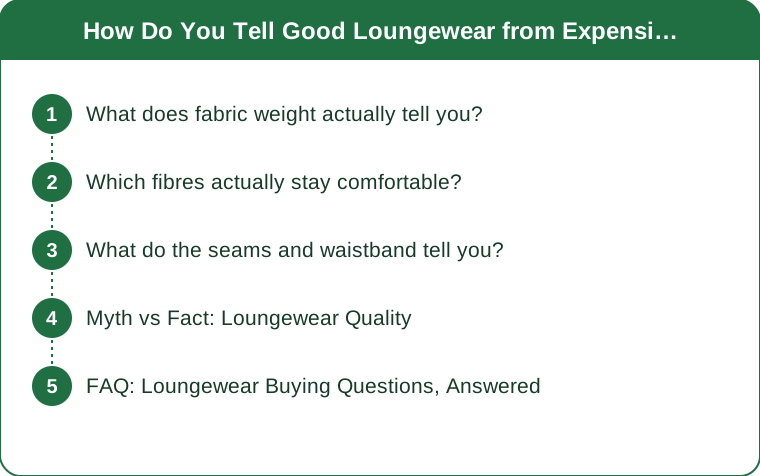
What does fabric weight actually tell you?
More than anything else on the label, and almost nobody checks it.
GSM means grams per square metre and it is the single most informative number a loungewear listing can give you. Under about 200 GSM a cotton knit is a summer tee weight - it will feel thin, show everything, and lose its shape at the elbows and knees.
Between 280 and 340 GSM is the sweet spot for year-round loungewear. Substantial enough to drape and hold shape, light enough to not overheat indoors.
Above about 400 GSM you are into sweatshirt territory, which is wonderful in a cold house and stifling in a warm one.
Brands that publish GSM are telling you something. Not because the number is a guarantee, but because a brand that knows and publishes its fabric weight is usually specifying its fabric rather than buying whatever the mill has.
If GSM is not listed, use the hold-up test. Hold the fabric to a light source. If you can clearly read text through a single layer, it is too light for anything you want to keep for two years.
And weight explains the most common complaint in the category - that loungewear which felt lovely in store feels thin and shapeless after a month. Light fabric plus loose knit equals fast bagging, and no amount of careful washing fixes a structural choice.
Which fibres actually stay comfortable?
The fibre name on the label is less useful than how the fibre was processed.
Combed or ring-spun cotton versus plain cotton. Both say 100% cotton. Combing removes short fibres before spinning, which produces a smoother, stronger, less pill-prone yarn. Ring-spun does something similar through the spinning method. This single distinction explains a large share of why two cotton sets at similar prices feel completely different.
Modal and Tencel lyocell are worth the premium. Both are regenerated cellulose fibres with excellent drape and moisture handling. They resist pilling better than cotton and stay smoother over time. A cotton-modal blend is close to ideal for loungewear.
Some elastane is good; a lot is a problem. 2 to 5 percent gives recovery so knees and elbows spring back. Above about 8 percent the garment starts behaving like activewear, and elastane degrades with heat, so those are the pieces that go slack first.
Polyester is not automatically bad but it is usually a cost decision. Recycled poly fleece can be genuinely excellent for cold-weather lounging. Thin polyester jersey against skin traps odour and that odour becomes permanent.
Bamboo viscose feels remarkable and wears out faster than it feels like it should. Lovely drape, cool hand, and a tendency to thin at stress points. Fine as a summer piece, less good as your daily set.
A practical shorthand: cotton-modal or cotton-Tencel with a few percent elastane, combed or ring-spun, in the 280 to 340 GSM range. That specification outperforms most things costing three times more.

What do the seams and waistband tell you?
They tell you where the garment will fail, and roughly when.
Flatlock or covered seams are the quality marker. Run your fingers along the inside shoulder and side seams. A flat, smooth join means the seam was constructed to sit against skin. A raised ridge of overlocked thread means it was constructed to be fast.
Exposed overlock at the inside seam is the single most common cause of the itchy patch people cannot locate - typically under the arm or along the side of the ribcage where the garment moves against you.
Waistbands are where cheap sets are most obviously cheap. A bare elastic band inside a fabric tube twists in the first wash and never fully untwists. Look for a wide knit-covered elastic sewn flat, ideally at least 3cm wide.
Drawcords should be flat and anchored. A round cord in a wide channel disappears inside on the first wash. A flat cord with a bar tack at the centre back cannot vanish.
Check the neckline and cuff ribbing. Stretch the neck opening gently and let go. It should snap back completely. A neckline that returns slowly is a neckline that will be wide and wavy by winter.
And check whether the side seams sit straight. Hold the garment up by the shoulders. If the side seams spiral forward, the fabric was cut off-grain, and that piece will twist on your body every time you wash it - a defect no price point makes acceptable.
Myth vs Fact: Loungewear Quality
Myth: Higher price means better fabric. Fact: In loungewear specifically, price correlates more with brand positioning and marketing spend than with GSM or fibre processing. Mid-price basics from brands that publish specifications routinely outperform premium sets that publish nothing.
Myth: 100% cotton is always the best choice. Fact: Pure cotton bags out at the knees and elbows because it has no recovery. A few percent elastane, or a modal blend, keeps the shape without meaningfully changing how it feels.
Myth: Pilling means poor quality fabric. Fact: Pilling is mostly about short fibres and abrasion, which is why combed cotton pills less. But pilling location matters more than presence - pills where the garment rubs a sofa or a bag strap are friction, not defect.
Myth: You should wash loungewear on cold to make it last. Fact: Cold water helps with colour and elastane, but the dryer does most of the damage. Heat degrades elastane permanently. Line drying a set you care about does more than any wash temperature change.
Myth: Softness in store predicts softness at home. Fact: Many fabrics are finished with softeners that wash out in two or three cycles. The scratchy-after-a-month experience is usually a coating disappearing, revealing the actual yarn underneath. This is why fibre processing beats in-store hand-feel as a signal.
FAQ: Loungewear Buying Questions, Answered
What GSM should I look for?
280 to 340 for cotton or cotton-blend knits used year-round. Under 200 is summer-tee weight and will lose shape. Over 400 is sweatshirt weight, which is excellent in a cold house and too warm in most heated homes.
Is modal better than cotton?
For loungewear specifically, usually yes - modal drapes better, resists pilling more, and stays smoother over time. A cotton-modal blend gets most of both, which is why it is so common in well-specified sets.
How much elastane should loungewear have?
2 to 5 percent. That gives recovery at knees and elbows without turning the garment into activewear. Above 8 percent it will feel compressive and will go slack sooner, since elastane degrades with heat.
Why does my loungewear get scratchy after a few washes?
Usually a chemical softener finish washing out, revealing the actual yarn. Combed or ring-spun cotton stays smooth because the smoothness is structural rather than applied.
Can I put loungewear in the dryer?
You can, and it will shorten its life noticeably if there is elastane in it. Heat is what breaks elastane down. Low heat or line drying roughly doubles how long a set holds its shape.
Are matching sets worth it over separates?
Only if you like them - there is no durability advantage. Sets tend to wear unevenly because tops get washed more often than bottoms, so buying separates lets you replace the piece that actually wore out.
TL;DR:
- Check GSM (280 to 340), fibre processing (combed or ring-spun, modal, Tencel), seam type (flatlock), and waistband (wide covered elastic) - price predicts almost nothing.
- 2 to 5 percent elastane gives shape recovery; more than 8 percent goes slack faster because heat degrades elastane.
- In-store softness is often a finish that washes out - fibre processing is the honest signal.
- Line drying does more for longevity than any wash-temperature change, because the dryer causes most of the damage.
The reason this checklist works is that it moves you from judging by feel - which is deliberately engineered at the point of sale - to judging by construction, which is much harder to fake and much easier to check.
See It in Motion
Seen here: Yoga Jogger Sweatpants with Pockets — shop it on bubblelime.com
Keep Reading
This article is for general informational and styling purposes only. Fit, sizing, and product availability may vary.