Can Loungewear Actually Be Worn Outside? An Honest Q&A
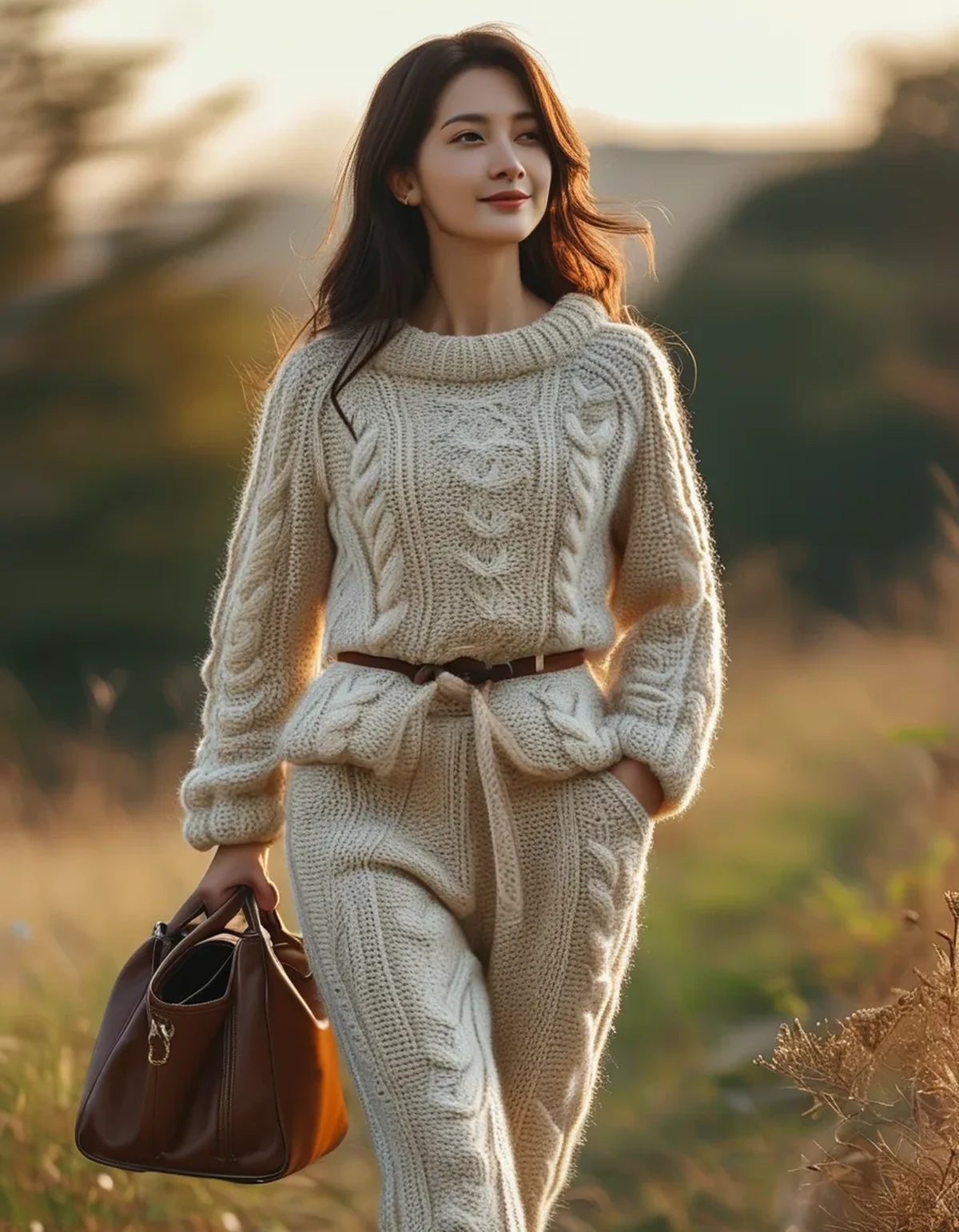
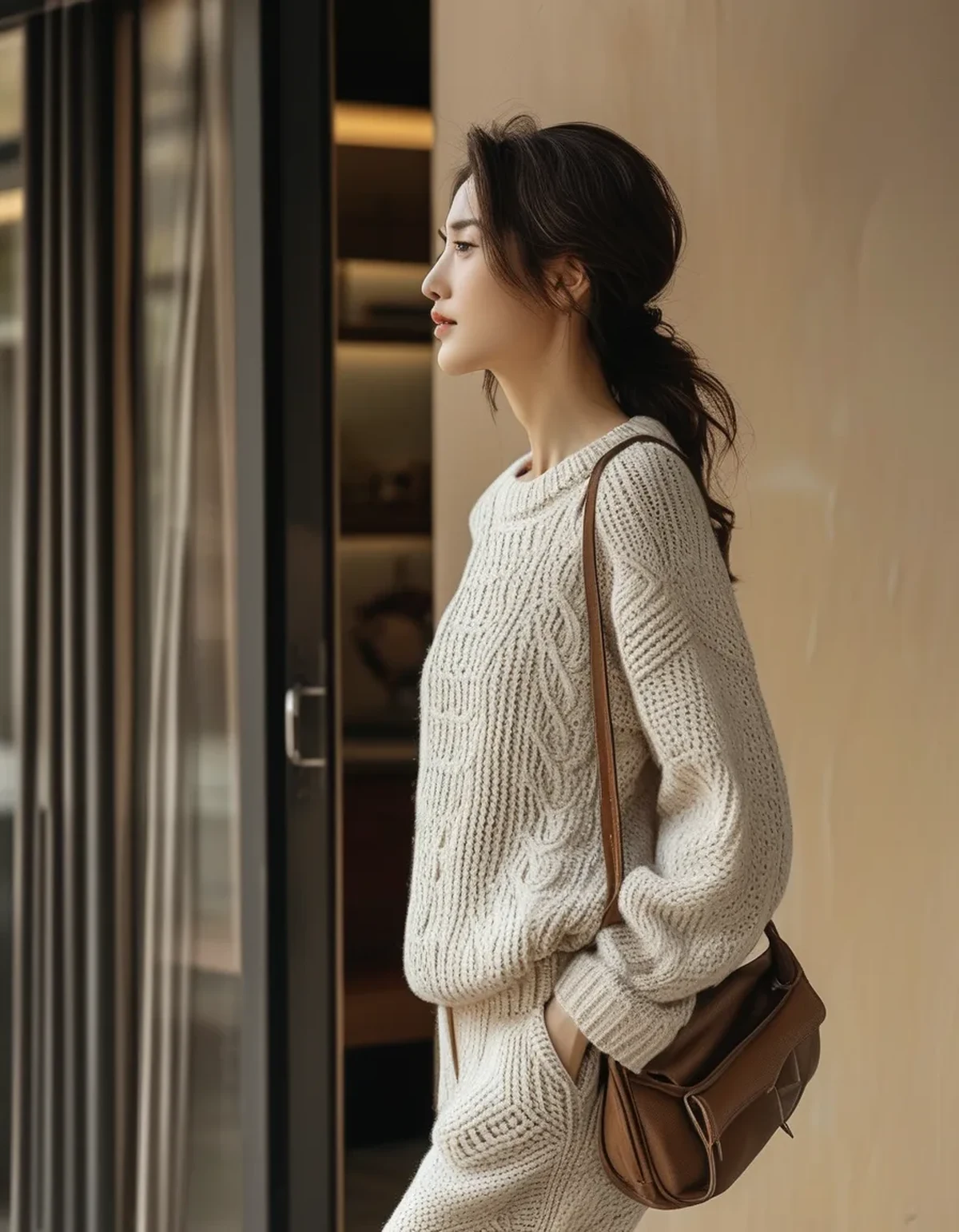
Quick Answer: Yes, when three things hold: the fabric has structure rather than cling, the fit is intentional rather than oversized-by-default, and one element in the outfit is not loungewear. A ribbed knit set with a structured bag and real shoes reads as an outfit. The same set with slides and a tote reads as pajamas outdoors. The signal isn’t the garment — it’s whether anything in the outfit required a decision.
The honest answer isn’t yes or no. It’s that a specific short list of details determines it, and most people can identify them once they know what to look at.
What makes a piece read as pajamas versus clothes?
Fabric behavior, more than anything else.
Fabric that clings and shows every wrinkle reads as sleepwear. Fabric that holds a shape — even a soft one — reads as clothing. This is why a ribbed knit set works outside and a thin jersey one doesn’t, even in the same silhouette.
Weight is the practical proxy. Thin, drapey, and slightly transparent reads as sleepwear. Substantial, opaque, and with some body reads as clothing.
Surface matters too. Matte, textured fabrics — ribbed knits, waffle, brushed cotton, French terry — read as intentional. Shiny satin and thin jersey read as bedroom, at least in their loose forms.
Wrinkle behavior is an underrated tell. Fabric that holds every crease from sitting looks slept-in within an hour, and “slept-in” is precisely the association you’re avoiding.
Test it by hand: hold the fabric up. Does it fall into a defined shape or collapse? Collapse is the pajama signal, and it’s remarkably consistent.
How much does fit matter?
More than fabric, actually — this is where most crossover attempts fail.
Loungewear is often oversized by default, and default oversized is what reads as sleepwear. Deliberate oversized — a specific proportion, balanced against something fitted — reads as a style choice.
The rule that does most of the work: one loose, one fitted. Wide-leg lounge pants with a fitted top works. Wide pants with an oversized top reads as pajamas. Both loose is the single most common mistake.
Length matters as much as width. Sleeves and hems that are too long — covering the hands, pooling at the floor — are strong sleepwear signals. Pushed-up sleeves and a hem that clears the floor change the same garment substantially.
Waistband visibility is a specific tell. A visible elastic waistband with a drawstring hanging out reads as pajamas. The same waistband under a slightly longer top, or with the drawstring tucked, reads differently.
Shoulder seam placement matters. A shoulder seam falling halfway down the arm is a sleepwear or streetwear signal depending entirely on the rest of the outfit — which is why the third rule below matters.
What’s the one non-loungewear element?
Something that clearly required a decision. Usually shoes or a bag, sometimes outerwear.
Shoes carry the most weight. Slides, slippers, and shapeless sneakers confirm the pajama read. Structured sneakers, loafers, ankle boots, or a clean flat contradict it immediately. This is the highest-return single change available.
A structured bag does similar work. A soft tote adds nothing; a bag with defined shape signals that the outfit was assembled.
Outerwear resolves almost anything. A blazer, a leather jacket, or a well-cut coat over a lounge set is the most reliable version of this rule — the jacket is unambiguously clothing, so the whole outfit reads as clothing.
Jewelry works too, at lower cost. Earrings and a watch signal deliberateness. Small, but genuinely effective.
One element is usually enough. Two is comfortable. Zero is the problem. The mechanism is simple: the outfit needs at least one piece that couldn’t plausibly have been slept in.
Hair counts. Whatever the clothes are doing, visibly unbrushed hair confirms the reading you’re trying to avoid.
Which pieces cross over and which never will?
A short, fairly reliable list.
Cross over well: ribbed knit sets, French terry sweatpants with a defined cuff, cashmere or wool-blend joggers, waffle knit tops, structured knit shorts, oversized cardigans, and matching knit sets in general. Matching sets do surprisingly well because coordination itself signals intent.
Cross over conditionally: hoodies (yes with structured pieces, no with more soft pieces), leggings (depends entirely on the top and shoes), thin jersey tees (yes if fitted, no if oversized).
Don’t cross over: anything with a visibly sleepwear-specific detail — piped pajama sets, nightgowns, robes worn as coats, fabric thin enough to be translucent, and anything with a print reading as bedding.
Slippers of any kind don’t cross over, including structured ones. This is the most common single failure.
Fleece is a hard case. Fitted, structured fleece works; thick shapeless fleece rarely does.
The general test: could you plausibly have slept in it? If yes for every single item, the outfit reads as pajamas outdoors regardless of quality.
Does context change the answer?
Substantially — and the honest version is that setting matters more than any construction detail.
Coffee run, dog walk, school pickup, errands: essentially anything works and the question mostly answers itself.
Casual social — a friend’s house, a casual lunch — needs the one non-loungewear element, and the rules above become relevant.
Travel is the most forgiving context and the one where good loungewear genuinely outperforms structured clothing. Airports have their own norms and comfort is legible there.
Workplaces, even casual ones, are a different question — and it’s a workplace-culture question rather than a styling one.
Weather does real work. A lounge set under a proper coat in cool weather is completely unremarkable. The same set in summer, fully visible, is more exposed. This is why late summer into fall is the easiest season for this — you gain a layer.
And it’s worth saying plainly: the norms here have shifted a lot and are still moving. Comfort-forward dressing is far more accepted than it was, and the anxiety about it is often outdated. The rules above are for when you want a specific put-together effect, not a standard you owe anyone.
FAQ: Loungewear Outside Questions, Answered
What’s the single fastest upgrade?
Shoes. Changing from slides to structured sneakers or loafers does more than any other single swap. It takes ten seconds and it changes the entire read of an outfit.
Are matching sets better or worse than separates?
Generally better for wearing out. Coordination signals intent, and a matched set reads as an outfit rather than as whatever was nearest. Mismatched soft pieces are the combination most likely to read as pajamas.
How do I stop loungewear from looking cheap after washing?
Cold wash, no fabric softener, air dry. Heat is what causes pilling and shape loss in knits. Turn ribbed and knit pieces inside out. The difference in appearance at month six is substantial.
Does color matter?
Somewhat. Neutrals and deeper tones tend to read more intentional than pastels, largely because pastels are conventionally associated with sleepwear. Tonal matching within an outfit helps regardless of which colors you choose.
TL;DR: Three details decide it, and none of them is the garment’s price.
- Fabric with structure, not cling. Hold it up — if it collapses, it reads as sleepwear.
- One loose, one fitted. Both loose is the most common failure.
- One element that clearly required a decision — shoes above all, then a structured bag or a jacket.
- Shoes are the fastest upgrade. Slides confirm the pajama read; structured sneakers or loafers contradict it.
- Matching sets outperform mismatched separates because coordination itself signals intent.
- Cool weather makes all of this easy — a coat over a lounge set is simply an outfit.
The test: could you plausibly have slept in every single item? If yes, that’s what it reads as.
See It in Motion
Seen here: High Waist Jogger Sweatpants with Pockets — shop it on bubblelime.com
Keep Reading
This article is for general informational and styling purposes only. Fit, sizing, and product availability may vary.